Business Name: BeeHive Homes of Andrews
Address: 2512 NW Mustang Dr, Andrews, TX 79714
Phone: (432) 217-0123
BeeHive Homes of Andrews
Beehive Homes of Andrews assisted living care is ideal for those who value their independence but require help with some of the activities of daily living. Residents enjoy 24-hour support, private bedrooms with baths, medication monitoring, home-cooked meals, housekeeping and laundry services, social activities and outings, and daily physical and mental exercise opportunities. Beehive Homes memory care services accommodates the growing number of seniors affected by memory loss and dementia. Beehive Homes offers respite (short-term) care for your loved one should the need arise. Whether help is needed after a surgery or illness, for vacation coverage, or just a break from the routine, respite care provides you peace of mind for any length of stay.
2512 NW Mustang Dr, Andrews, TX 79714
Business Hours
Monday thru Sunday: 9:00am to 5:00pm
Facebook: https://www.facebook.com/BeeHiveHomesofAndrews
YouTube: https://www.youtube.com/@WelcomeHomeBeeHiveHomes
Families typically start looking at memory care after a crisis. A wandering incident. A kitchen fire that might have been worse. A fall that exposed just just how much confusion has crept in. By the time you are comparing cottage-style homes to large locked systems, you are currently bring a heavy mix of guilt, urgency, and exhaustion.
Having operated in senior care settings of both kinds, I have actually enjoyed households struggle over this exact same decision. There is no universal "best response". There is just the very best fit for this specific person, in this specific season of their illness, with this specific family supporting them.
This article looks carefully at the compromises in between little, intimate cottage-style memory care homes and larger, standard protected units, typically part of a big assisted living or continuing care campus. The objective is not to crown a winner, however to offer you a practical lens so you can choose that you can cope with, mentally and practically.
What "cottage-style" and "big locked unit" normally mean
The terms sound user-friendly, however in practice they cover a range of setups. It helps to comprehend what you are most likely to see when you tour.
Cottage-style memory care is normally a little home-like setting, normally with 8 to 20 citizens. It may be a standalone home in a residential area or a cluster of small houses on a larger senior care school. Common functions consist of a shared kitchen area and living-room, easy access to a safe and secure lawn or garden, and staff who drift between a little number of residents.
Larger locked systems, frequently called protected memory care or dementia systems, are typically part of a bigger assisted living, nursing home, or senior care neighborhood. The memory care floor or wing may house 25 to 60 citizens, often more. There are normally common dining rooms, activity areas, and often specialized areas like snoezelen rooms or "memory lanes" with classic decoration. Doors in and out of the unit are locked or alarmed, and citizens can not leave unescorted.
Within both categories, quality varies drastically. A well-run big unit can feel calmer and more dignified than an improperly run home, and vice versa. Structure alone does not guarantee great care, however it does shape what is possible.
The psychological weight behind the choice
Families rarely decide between these alternatives on spreadsheets alone. The choice is tangled up with hopes and fears.
Cottage-style homes typically resonate emotionally with adult children who want something that feels closer to "home" than "center". They imagine their loved one sitting at a kitchen table, smelling lunch cooking, seeing birds in the backyard. For someone who constantly valued intimacy, privacy, and familiar regimens, that image can seem like a lifeline.
Large locked systems can feel frightening at first glimpse, particularly if a tour lands at a busy time, with several locals in distress. Yet some households draw comfort from the structure, the elderly care existence of nurses on-site, and the visible systems: medication carts, call lights, in-depth care strategies. For those who fear medical crises, falls, or behavioral escalation, this environment can feel safer.
Underneath, there is a different stress. Some relatives focus on a home-like atmosphere even if it suggests less bells and whistles. Others focus on medical backup and depth of staffing even if it implies a more institutional visual. Knowing which fear is louder for you assists clarify your path.
How stage of illness influences the ideal setting
The very same individual might flourish in a cottage setting at one phase of dementia and need a bigger locked unit at a later phase. When we neglect disease progression, we often place people in settings that will work for an instant, then fail abruptly.
Early to mid-stage dementia, especially when the person is still ambulatory and socially engaged, can be an exceptional fit for cottage-style homes. In that stage, familiarity and routine matter a good deal. The capability to stroll a little, predictable circuit - bedroom, kitchen, deck, garden - decreases stress and anxiety. Homeowners typically take part in easy household activities: folding laundry, setting the table, watering plants. These little jobs provide structure and maintain dignity.
Mid to later stages, specifically when behavioral signs are strong, can tilt the balance. Regular agitation, exit-seeking, or complicated medical co-morbidities require personnel who are both various and deeply trained. Bigger units, tied into the wider assisted living or knowledgeable nursing facilities, often have on-site nurses around the clock, all set access to visiting doctors, and developed procedures for psychiatric support. Not all do, but the organizational scale makes these supports more likely.
Severe, end-stage dementia provides another angle. By this stage, mobility might be limited, and medical requirements tend to dominate. Some cottage homes partner with hospice and do this wonderfully, focusing on convenience, touch, and mild presence. Others struggle due to the fact that they do not have 24-hour nursing, and households deal with frequent healthcare facility transfers. A bigger, clinically focused memory care or nursing home unit might manage end-of-life signs more efficiently, if it is well staffed and communication is strong.
The useful concern to ask yourself is not simply "where is my mother today" however "how will this setting manage her if she decreases a couple of notches".
Safety, freedom, and the issue of locked doors
Both small cottages and big units are safe and secure by design, but how that security feels to the resident can differ.
In a cottage, secure perimeters are typically less obvious. A fenced yard with a locked gate, doors with keypad codes, and alarmed exits can all blend into a residential façade. Citizens may stroll freely within your house and garden without constantly coming across locked doors. This works well for people who wander however are otherwise stable on their feet and not aggressive. I have actually viewed many homeowners stroll the very same garden path lots of times in a day, content in the repetition.
In a large locked system, security is more noticeably main. Entryway and exit doors are usually prominent, with keypad entries that personnel and visitors utilize throughout the day. Passages may be long, and locals who wander can cover a great deal of ground. For some, this uses a sense of space and range: various lounges, activity areas, and dining rooms to check out. For others, particularly those who become distressed by closed doors, the constant suggestion that they can not leave amplifies agitation.
When you tour, do not simply ask "is it secure". Watch how individuals move. Do homeowners appear unwinded in the space, or do they cluster at doors, trying to exit? Exist safe strolling courses inside your home and out? For somebody who has actually always needed to be physically active, the ability to walk without being stopped every few feet matters profoundly.
Staffing realities behind the brochures
Brochures highlight personnel ratios, however they hardly ever inform the whole story. As somebody who has actually arranged and monitored care teams, I pay more attention to patterns of work than to any single number.
Cottage-style homes frequently advertise low staff-to-resident ratios. With, state, 10 citizens and 2 caretakers on responsibility, the math looks beneficial. Those caretakers typically do whatever: personal care, meal prep, light housekeeping, activities, and family interaction. When the team is well trained and steady, the connection can be exceptional. Personnel actually do understand each resident's rhythms, triggers, and histories. Little teams likewise imply changes in habits are discovered quickly.
The fragility of that design appears when someone calls out sick or when there is a resident with extremely high needs. A single person up all night, another who requires two-person transfers, and unexpectedly that relaxing ratio feels thin. Burnout threat is genuine, since personnel carry psychological in addition to physical labor in close quarters.
Larger locked systems more often separate roles. There may be caregivers devoted to personal care, activity personnel running programs, dining staff handling meals, and nurses supervising medications and medical requirements. Ratios can be less beneficial on paper, especially at night, however there are more layers of backup. If one caretaker is tied up with a prolonged shower, another can often react to a fall alarm. If somebody's behavior escalates, a nurse can step in, adjust medications, or call the physician.
Neither design is instantly better. The crucial concerns have to do with consistency, training, and leadership. Do personnel stay long enough to understand homeowners well, or exists continuous turnover? Have caregivers got particular dementia and behavioral training, or just generic orientation? When personnel are overwhelmed, what supports exist for them?
The feel of life: sound, routine, and meaning
Environment and regular shape quality of life as much as any scientific care.
Cottage-style memory care typically uses a quieter sensory environment. Fewer people, less overhead paging, fewer carts moving around. Meals might be prepared in an open cooking area where citizens can smell coffee and soup. The day's activities typically stream around common home tasks: sorting linens, baking, gardening, seeing a favorite video game reveal together. For somebody easily overstimulated, or for a spouse who desires visits to feel individual and unwinded, this rhythm can be ideal.
Large locked systems provide more formal programming. There may be a published activity calendar, going to performers, exercise classes, spiritual services, and specialized dementia-friendly offerings. The scale allows for range: one resident may sign up with a music session while another chooses a quieter art group in a side space. Families who want plentiful structured engagement often appreciate this. On the other hand, more bodies in one space suggest more sound, more disturbances, and more potential for disputes in between residents.
One peaceful detail to observe on any tour: what takes place between scheduled activities. Do residents sit unengaged in front of a television for hours, despite setting size? Or do personnel weave small interactions into the spaces - using hand massages, checking out picture albums, bringing someone to the window to watch birds? The best memory care, home or big unit, focuses less on big events and more on these small, repeated moments of connection.
Medical oversight and complex needs
As dementia advances, other health conditions seldom time out. Heart failure, diabetes, COPD, persistent discomfort, and psychiatric histories walk in the door with your loved one. The ability of a memory care setting to manage these conditions securely typically depends more on medical infrastructure than on structure style.
Cottage homes are normally accredited as assisted living or residential care, not nursing homes. That implies restricted medical treatments are permitted on-site, and visiting nurses or hospice groups manage more specialized care. For fairly steady senior citizens, this works well. For those with frequent exacerbations, lab needs, or complex medication routines, the home model can be strained.
Larger locked units within an assisted living or competent nursing campus frequently have nurses on-site 24 hours, with more powerful ties to seeking advice from physicians, labs, and pharmacies. It may be simpler to adjust medications immediately, capture infections early, and prevent unneeded hospitalizations. Not all large units have this level of combination, however many do, specifically those marketed as greater acuity memory care.
If your loved one has substantial medical fragility or a history of behavioral crises requiring psychiatric support, ask in-depth concerns about how each setting deals with such scenarios. Does the home partner with a home health or psychiatric service? Does the large unit have standing protocols for quick intervention that do not default to calling 911?
Cost, value, and what you are actually paying for
Families often presume cottage-style homes are constantly more pricey. In practice, both designs can vary commonly depending on region, amenities, and staffing.
Cottage-style memory care tends to bundle services, with a flat month-to-month rate that covers room, board, standard care, and activities. Extra costs may obtain very high care needs, but the pricing is typically easier. What you are acquiring is intimacy: a little environment, more psychological connection, and a domestic feel.
Large locked units in assisted living or senior care neighborhoods typically utilize tiered prices. There is a base rate for space and board, then incremental charges as care needs increase. Medication management, incontinence care, two-person transfers, or special diets can all add line products. What you are buying is infrastructure: access to more staff, more specialized programming, and more clinical oversight.
Value, in this context, is not almost dollars monthly. It is about prevented crises, reduced caretaker burnout, and the possibility that your loved one will be able to stay in the same setting as needs increase. A somewhat more expensive system that prevents 2 or 3 hospitalizations in a year can be a better deal, economically and mentally, than a cheaper choice that causes repeated crises and relocations.
Using respite care as a trial run
When families feel torn, I often recommend using respite care as a way to check a setting with lower stakes. Many memory care neighborhoods, both cottage-style and big systems, offer short-term stays that last from a couple of days to a number of weeks.
Respite care lets you see how your loved one actually responds to the environment, not just how you imagine they might. An individual who always said they disliked "organizations" may shock you by growing in a hectic memory unit with lots of individuals to see and staff continuously coming and going. Somebody you presumed would like a small home might, in practice, feel restricted or overly watched.
Respite also gives you a look behind the marketing. You will see how personnel manage personal care, how they react during the night, and how they interact with you. Pay attention to your own stress level during the respite duration. Do you discover yourself able to sleep and think straight once again, due to the fact that you trust the setting? Or do you feel continuously on edge, inspecting your phone, stressed over what may be happening?
Even a week of respite can clarify your instincts more than any variety of site reviews.
A simple contrast at a glance
The nuances matter more than any chart, but a structured comparison can assist arrange your thoughts.
|Aspect|Cottage-style memory care|Big locked memory system|| -----------------------------|--------------------------------------------------------|-----------------------------------------------------------|| Typical size|8 to 20 citizens|25 to 60+ homeowners|| Atmosphere|Quiet, home-like, domestic routines|Busier, more institutional, different activities|| Staffing model|Small, multi-tasking team|Layered teams, more defined medical functions|| Medical facilities|Minimal on-site nursing, depends on checking out services|Most likely to have 24/7 nursing and medical support|| Security feel|Subtle, lawn and doors secured but less popular|Apparent locked doors, bigger walking circuits|| Activities|Informal, focused on household and small group life|Official calendars, bigger groups, checking out entertainers|| Best healthy tendencies|Early to mid-stage, chooses quiet familiarity|Mid to late-stage, complex needs or require for more backup|
Use this as a starting point, not a verdict. The real decision lies in matching these tendencies with the real person you love.
Questions to ask when you tour
To keep the list restraint, here is one succinct list that typically helps households remain focused during tours. Write these down and inquire in your own words.
How lots of residents live here, and the number of personnel are on responsibility days, evenings, and nights? What is your personnel turnover like, and the length of time has your typical caretaker been here? Can you describe a normal day for someone with my loved one's level of dementia? How do you manage a resident who becomes agitated, aggressive, or tries to leave? What medical problems can you handle on-site, and when do you call 911 or send out to the hospital?Listen not just to the material of the responses, but to the confidence and uniqueness. Unclear or defensive replies are as telling as clear, well-grounded ones.
Red flags that matter more than constructing style
Families sometimes become so concentrated on selecting in between cottage and big unit that they ignore more basic quality issues. In practice, there are warning signs that should provide you pause no matter setting.
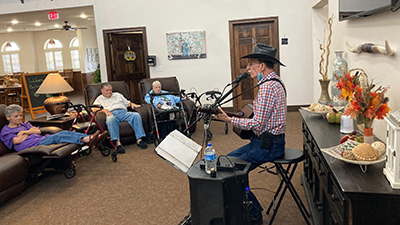
When you stroll onto the unit, pay attention to smell and noise. Periodic smells in a memory care environment are inescapable. Persistent, strong urine or feces smells tell you that standard care is not keeping up. Similarly, occasional sobs or distressed voices are typical. A continuous chorus of shouting, unattended calls for assistance, or personnel speaking dramatically to residents shows much deeper issues.
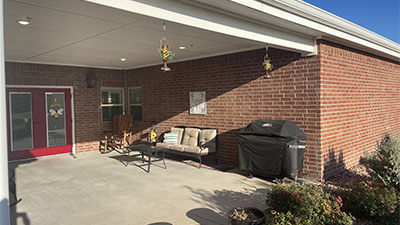
Watch how staff connect with locals when they do not understand they are being observed. Do they resolve individuals by name, at eye level, in a calm tone? Or do they rush, discuss them, or neglect them while concentrating on jobs? In a strong community, staff seem emotionally present even when hectic. In a struggling one, you will notice a sort of numbness.
Look at residents' grooming and clothing. Are individuals clean, hair brushed, correctly dressed for the season? Or do you see mismatched shoes, food spots, neglected hair? Small information in personal appearance reflect the day-to-day thoroughness of care.
Finally, note how the management interacts with you. Responsive, transparent leaders often manage better care. If you find it tough to get clear responses during the sales stage, it seldom enhances later.
Matching setting to person: a couple of real-world patterns
Every story is distinct, but certain patterns emerge frequently.
The former housewife who always kept a meticulous household and valued one-on-one connection typically does well in a cottage. She may gladly "assist" in the cooking area, fold napkins, and chat with the same caretakers every day. She may feel lost or overwhelmed on a big unit with moving faces and frequent announcements.
The retired engineer with mid-stage dementia and a long history of cardiovascular disease and diabetes might fare better in a bigger locked unit with strong medical support. He may benefit from more structured activities targeted to various cognitive levels and from having a nurse close by when his blood sugar level varies or he experiences shortness of breath.
The person with early-onset dementia and significant behavioral symptoms, consisting of aggressiveness or extreme exit-seeking, can stretch any setting. Some specialized big systems are better geared up for such cases, with psychiatric assistance and higher staffing ratios. A little cottage may not have the ability to securely handle continual, extreme habits across time, even with the best intentions.
On the other hand, I have actually seen people with sophisticated dementia who were considered "tough" in a hectic unit ended up being calmer in a home. Fewer people, softer noise levels, and a predictable pattern of faces decreased their triggers. They stopped striking, stopped calling out, and began sleeping through the night. Environment, in dementia care, is not decorative. It is therapeutic.
Weighing your own limitations and values
When families speak about "the ideal location", they often focus solely on the resident. That focus is admirable, however insufficient. Your capacity as a caretaker, your range from the center, your work schedule, and your emotional bandwidth all matter.
If you are most likely to visit daily, a smaller home where you can sit at the kitchen area table, pour your own coffee, and slip into the background of daily life might fit how you want to associate with your loved one from now on. It can feel more natural to sign up with a conversation in a living room than to navigate a big unit's routines and sign-in procedures.
If you live far, work long hours, or carry other caregiving duties, a larger facility with 24/7 scientific backup, social work support, and a broad activity program may give you more assurance. You are, in a sense, working with a group to hold what you can not physically hold every day. That is not a failure. It is a recommendation of human limits.
The right memory care setting is the one where your loved one is as safe, comfortable, and engaged as their disease allows, and where you can look at yourself in the mirror and state, "Provided our reality, this is the most loving option we can handle."
Allowing the choice to be "sufficient"
No alternative entirely removes the grief of needing memory care in the very first place. Even best care does not reverse dementia. What it can do is soften the edges of the disease, lower avoidable suffering, and secure relationships.
When you stand at the fork in between cottage-style homes and large locked systems, bear in mind that you are not choosing in between love and desertion, or in between home and organization. You are picking in between two different ways of wrapping assistance around a susceptible brain and body.
Visit face to face. Ask difficult questions. Use respite care if you can. Weigh phase of disease, medical requirements, character, and your own limitations. Then choose the setting that finest matches those truths, not the one that a lot of flatters your ideals.
Memory care, at its best, is not about structures at all. It is about individuals: your loved one, the personnel who will care for them, and you, learning how to enjoy from a various distance than in the past. Whether in an intimate home or a bigger secured unit, that shared humanity matters more than any architectural style.
BeeHive Homes of Andrews provides assisted living care
BeeHive Homes of Andrews provides memory care services
BeeHive Homes of Andrews provides respite care services
BeeHive Homes of Andrews supports assistance with bathing and grooming
BeeHive Homes of Andrews offers private bedrooms with private bathrooms
BeeHive Homes of Andrews provides medication monitoring and documentation
BeeHive Homes of Andrews serves dietitian-approved meals
BeeHive Homes of Andrews provides housekeeping services
BeeHive Homes of Andrews provides laundry services
BeeHive Homes of Andrews offers community dining and social engagement activities
BeeHive Homes of Andrews features life enrichment activities
BeeHive Homes of Andrews supports personal care assistance during meals and daily routines
BeeHive Homes of Andrews promotes frequent physical and mental exercise opportunities
BeeHive Homes of Andrews provides a home-like residential environment
BeeHive Homes of Andrews creates customized care plans as residents’ needs change
BeeHive Homes of Andrews assesses individual resident care needs
BeeHive Homes of Andrews accepts private pay and long-term care insurance
BeeHive Homes of Andrews assists qualified veterans with Aid and Attendance benefits
BeeHive Homes of Andrews encourages meaningful resident-to-staff relationships
BeeHive Homes of Andrews delivers compassionate, attentive senior care focused on dignity and comfort
BeeHive Homes of Andrews has a phone number of (432) 217-0123
BeeHive Homes of Andrews has an address of 2512 NW Mustang Dr, Andrews, TX 79714
BeeHive Homes of Andrews has a website https://beehivehomes.com/locations/andrews/
BeeHive Homes of Andrews has Google Maps listing https://maps.app.goo.gl/VnRdErfKxDRfnU8f8
BeeHive Homes of Andrews has Facebook page https://www.facebook.com/BeeHiveHomesofAndrews
BeeHive Homes of Andrews has an YouTube page https://www.youtube.com/@WelcomeHomeBeeHiveHomes
BeeHive Homes of Andrews won Top Assisted Living Homes 2025
BeeHive Homes of Andrews earned Best Customer Service Award 2024
BeeHive Homes of Andrews placed 1st for Senior Living Communities 2025
People Also Ask about BeeHive Homes of Andrews
What is BeeHive Homes of Andrews Living monthly room rate?
The rate depends on the level of care that is needed. We do an initial evaluation for each potential resident to determine the level of care needed. The monthly rate is based on this evaluation. There are no hidden costs or fees
Can residents stay in BeeHive Homes until the end of their life?
Usually yes. There are exceptions, such as when there are safety issues with the resident, or they need 24 hour skilled nursing services
Do we have a nurse on staff?
No, but each BeeHive Home has a consulting Nurse available 24 – 7. if nursing services are needed, a doctor can order home health to come into the home
What are BeeHive Homes’ visiting hours?
Visiting hours are adjusted to accommodate the families and the resident’s needs… just not too early or too late
Do we have couple’s rooms available?
Yes, each home has rooms designed to accommodate couples. Please ask about the availability of these rooms
Where is BeeHive Homes of Andrews located?
BeeHive Homes of Andrews is conveniently located at 2512 NW Mustang Dr, Andrews, TX 79714. You can easily find directions on Google Maps or call at (432) 217-0123 Monday through Sunday 9:00am to 5:00pm
How can I contact BeeHive Homes of Andrews?
You can contact BeeHive Homes of Andrews by phone at: (432) 217-0123, visit their website at https://beehivehomes.com/locations/andrews/, or connect on social media via Facebook or YouTube
Visiting the Lakeside Park Lakeside Park offers a calm setting with water views suitable for assisted living and elderly care residents enjoying gentle respite care outings.